 ultimate-guide
How Much Does Septic System Installation Cost in 2026?
Last Updated: October 25, 2026
Quick Summary
Septic system installation cost ranges from $3,590 to $12,463 nationally, with an average of $8,027, though conventional systems typically cost $6,000 to $12,000 installed. Costs vary significantly based on soil conditions, site access, system type, and local permitting requirements in your area.
- A 1,000-gallon septic tank costs $800 to $1,500; a 1,500-gallon tank runs $1,200 to $2,500
- Alternative systems like aerobic treatment units cost $8,000 to $15,000 compared to conventional systems
- Permits, design work, and inspections add $500 to $1,300 to your total installation cost
- Labor represents the largest variable cost and can double or triple your bill depending on site difficulty
- Routine tank pumping costs $300 to $500 every three to five years over the system's 30-year life
Table of Contents
- Septic System Installation Cost Breakdown for 2026
- What Factors Drive Septic System Installation Costs
- Conventional Septic System Cost vs. Installation Expenses
- Alternative Septic System Cost and When to Consider Them
- Septic System Cost in Davidson County, NC
- Septic Installation Permits in North Carolina and Associated Costs
- Hidden Costs and Long-Term Maintenance Expenses
- Getting an Accurate Septic System Installation Estimate
- Frequently Asked Questions
Septic System Installation Cost Breakdown for 2026
Understanding the cost of septic system installation in 2026 is critical for homeowners, builders, and landowners planning property development in Thomasville and the surrounding areas. According to Angi's 2026 installation cost analysis, septic system installation costs range from $3,590 to $12,463, with a national average of $8,027.
The total cost breaks down into several distinct components: the tank itself, the drainfield, labor, permits, site preparation, and contingencies for unexpected conditions. A 1,000-gallon septic tank typically costs between $800 and $1,500, while a larger 1,500-gallon tank runs $1,200 to $2,500.
What most homeowners miss is that installation cost and system cost are not the same thing. A complete septic system replacement can run $10,000 to $25,000 or more. The difference hinges on soil conditions, site access, local permitting requirements, and whether you're installing a conventional system or something more specialized.
What Factors Drive Septic System Installation Costs
Several key variables determine whether your septic system installation will fall at the lower or upper end of the cost spectrum.
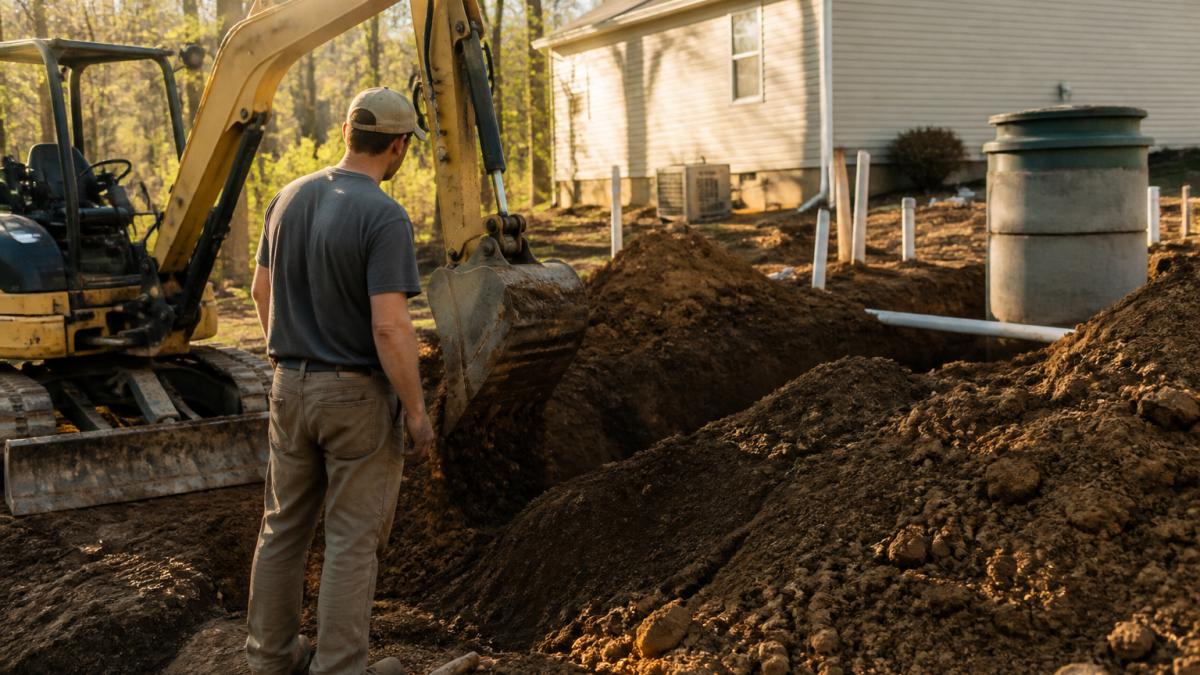
Soil composition directly impacts both feasibility and expense. Soil permeability, how quickly water drains through it, determines whether a conventional drainfield will work on your property.
Labor represents the largest variable in your total cost. Excavation, tank installation, drainfield construction, and system testing all require skilled technicians and heavy equipment. Labor costs vary by region, contractor experience, and project complexity.
System design complexity adds cost when conditions demand it. A standard gravity-fed system costs less than a system requiring a pump or aerobic treatment unit.
Soil Conditions and Site Preparation
Your property's topography and soil conditions are the primary cost drivers for septic installation. Properties with poor drainage, high water tables, or challenging terrain require more extensive site work and potentially alternative system designs. If your lot has dense vegetation, rocks, or limited access, site clearing and preparation add labor hours before the actual septic work begins.
For properties with dense brush or overgrown lots, site preparation can account for 15 to 25 percent of your total project cost. EPA guidance on septic system site assessment emphasizes that proper site evaluation prevents costly mistakes later. A professional site assessment identifies drainage patterns, soil composition, and potential complications before equipment arrives.
Grading and site preparation services(page:4) help establish a proper foundation for your septic system and ensure compliance with local standards. Proper grading directs surface water away from the drainfield, prevents erosion, and protects your investment for decades.
Tank Size and System Type
The size of your septic tank depends on household size, water usage, and local code requirements. Most residential tanks range from 750 gallons for small households to 2,000 gallons or larger for bigger families or commercial applications. A larger tank costs more upfront but handles higher water volumes and requires less frequent pumping.
Conventional systems with gravity-fed drainfields are the most affordable option and work well on properties with suitable soil and drainage. Alternative systems, including aerobic treatment units, sand filters, constructed wetlands, and mound systems, cost significantly more but become necessary when soil conditions or property layout won't support conventional designs. An aerobic treatment unit can add $4,000 to $8,000 to your total installation cost compared to a conventional system.
Conventional Septic System Cost vs. Installation Expenses
A conventional septic system remains the most cost-effective choice for most residential properties. This system type uses gravity to move wastewater from your home through the tank and into a drainfield, where soil naturally filters it. The simplicity of this design keeps both materials and labor costs lower than engineered alternatives.
The conventional system cost includes the tank, drainfield materials, and basic installation labor. For a typical three-bedroom home in Thomasville, a conventional system installation averages $6,000 to $12,000. This figure assumes standard soil conditions, reasonable site access, and straightforward design. Properties with complications, poor drainage, high water tables, limited space, or difficult terrain, push costs higher.
Installation expenses beyond the system itself include excavation equipment rental, site grading, permitting fees, and inspection costs. These ancillary expenses often surprise homeowners who focus only on tank and drainfield pricing.
Alternative Septic System Cost and When to Consider Them
Alternative septic systems become necessary when conventional systems won't work on your property. These engineered solutions cost more upfront but solve specific drainage or space challenges that make conventional systems impossible.
An aerobic treatment unit actively oxygenates wastewater, allowing more aggressive treatment than passive conventional systems. This system works on properties with poor drainage, high water tables, or limited drainfield space. Aerobic systems cost $8,000 to $15,000 installed, compared to $6,000 to $12,000 for conventional systems.
Sand filter systems and mound systems work for properties with challenging soil or drainage conditions. Sand filters cost $8,000 to $20,000 installed. Mound systems, which raise the drainfield above natural grade, run $10,000 to $25,000. Constructed wetlands and other advanced treatments can exceed $20,000. These alternatives solve real problems on difficult properties, but they're not cheaper, they're necessary.
Septic System Cost in Davidson County, NC
Installation costs in Davidson County reflect regional labor rates, soil conditions typical to the Piedmont region, and local permitting requirements. Properties throughout Thomasville and surrounding areas face similar soil challenges: clay-heavy soils common to the Piedmont region that drain slowly and often require engineered solutions.
Regional factors affecting your septic system installation cost include the prevalence of rocky terrain, which increases excavation time and equipment wear. Groundwater levels in Davidson County sit relatively high in many areas, complicating conventional drainfield design. These regional characteristics push installation costs toward the higher end of national averages for many properties.
Get you free estimate today! →
Local contractors familiar with Thomasville soil conditions and Davidson County regulations can estimate your specific cost more accurately than national averages. Site-specific factors, your exact soil composition, water table depth, property slope, and vegetation, determine whether you'll pay $6,000 or $15,000 for installation.
Septic Installation Permits in North Carolina and Associated Costs
North Carolina requires permits for all septic system installations and replacements. The permit process involves site evaluation, system design approval, and post-installation inspection. Permit costs vary by county but typically range from $200 to $500 in Davidson County.
Design work, required before permitting, costs $300 to $800 depending on system complexity. A professional designer evaluates your soil, water table, property slope, and household size to create a system that meets North Carolina's strict standards. This upfront investment prevents costly mistakes and ensures your system passes inspection.
Inspection fees, separate from permit costs, run $100 to $300. The county inspector verifies that your installed system matches the approved design and meets all code requirements. Some counties charge a single inspection fee; others charge per inspection visit. Budget for at least one inspection, possibly two if the inspector identifies issues requiring correction.
Hidden Costs and Long-Term Maintenance Expenses
Most homeowners underestimate the total cost of septic system ownership by focusing only on installation. Long-term maintenance expenses extend far beyond the initial installation bill.
Septic tank pumping is your most predictable maintenance cost. A typical household should pump their tank every three to five years. Pumping costs $300 to $500 per visit in the Thomasville area.
Drainfield failure represents the most expensive septic problem. A failed drainfield requires replacement, costing $5,000 to $15,000 or more depending on system type and soil conditions.
System repairs short of replacement run $1,000 to $3,000. A failing pump in an aerobic system costs $800 to $1,200 to replace. A clogged drainfield line might require $500 to $2,000 in cleaning and repair.
Soil degradation over time can reduce drainfield effectiveness. Adding additives, replacing sections of drainfield, or upgrading to a more strong system becomes necessary if your soil has deteriorated.
Getting an Accurate Septic System Installation Estimate
An accurate estimate requires a site visit and soil evaluation. National averages and online calculators give you a general range, but your actual cost depends entirely on your property's specific conditions.
A thorough estimate includes:
- Soil test results and permeability rating
- Site survey showing property slope and water table depth
- System design specifications and tank size
- Labor hours and equipment rental costs
- Permit and inspection fees
- Contingency for unexpected conditions (typically 10 to 15 percent)
The estimate should itemize each cost component so you understand where your money goes. Vague estimates that lump everything into a single figure leave room for surprise charges during the project.
Septic installation and repair services in Thomasville(page:1) begin with a detailed site assessment.
Compare estimates from multiple contractors, but don't choose based on price alone. The lowest bid often reflects incomplete scope or unrealistic assumptions.
The cost of septic system installation in 2026 varies dramatically based on your property's soil, drainage, and site conditions. Understanding these cost drivers helps you budget realistically and avoid surprises.
| Cost Component | Typical Range | Notes |
|---|---|---|
| Septic tank (1,000-1,500 gal) | $800-$2,500 | Larger tanks cost more but require less frequent pumping |
| Drainfield materials and labor | $2,000-$6,000 | Varies with soil conditions and system type |
| Excavation and site prep | $1,500-$4,000 | Rocky or difficult terrain increases costs |
| Permits and design | $500-$1,300 | Required in North Carolina; varies by county |
| Labor and equipment | $2,000-$5,000 | Depends on project complexity and site access |
| Total conventional system | $6,000-$12,000 | |
| Alternative systems (aerobic, mound, sand filter) | $8,000-$25,000+ | For properties with poor drainage or limited space |
Frequently Asked Questions
How much does it cost to install a septic system in Thomasville, NC, in 2026?
Septic system installation cost ranges from $3,590 to $12,463 nationally, with an average of $8,027 according to 2026 data. Costs in your area depend on soil conditions, lot size, system type, and local labor rates. For a property-specific estimate reflecting local conditions and permit requirements, contact Four Oaks Grading and Septic LLC for a free assessment.
What factors affect the cost of septic system installation in Davidson County?
Septic system installation costs in Davidson County are shaped by soil composition, drainage characteristics, lot size, distance from the home to the drain field, system type (conventional or alternative), and local permit and inspection fees. Poor soil conditions or limited space may require more extensive excavation or specialized systems, increasing costs. Professional site evaluation is essential for accurate pricing.
How much does a conventional septic system cost compared with an alternative system?
Conventional septic systems typically cost less upfront, ranging from $3,590 to $12,463 depending on tank size and site conditions. Alternative systems (aerobic, sand filters, or mound systems) often cost more because they require additional components and maintenance. However, alternative systems may be necessary on properties with poor soil drainage or limited space, making them the only viable option regardless of cost.
Does septic installation cost include the tank, drain field, excavation, and permits?
Installation costs typically cover the septic tank, drain field, excavation, and labor. Permits and inspections are separate and vary by county; some estimates include them, others do not. A 1,000-gallon tank costs $800-$1,500, while a 1,500-gallon tank runs $1,200-$2,500. Always ask your contractor whether permits, inspections, and site restoration are included in the quoted price.
What permits are needed to install a septic system in Davidson County, NC?
North Carolina requires a septic system design approval from the local health department and a construction permit before installation begins. You must also obtain a septic system installation permit specific to your county and property. Inspections occur at multiple stages: tank installation, drain field excavation, and final system approval. Four Oaks Grading and Septic LLC handles permit coordination and compliance with local standards.
How do soil conditions and lot size affect septic system installation costs?
Soil composition directly impacts cost because septic systems require proper drainage and percolation. Poor-draining or rocky soil may require additional excavation, fill material, or an alternative system, raising costs significantly. Smaller lots may limit drain field placement, requiring more complex design or a mound system. A professional soil evaluation determines feasibility and identifies cost factors before you commit to installation.