 how-to
Fix Standing Water in Your Yard: A Step-by-Step Guide
Table of Contents
- Diagnose Where and Why Water Is Pooling
- Yard Drainage Solutions That Actually Work
- Install a French Drain for Yard Drainage
- Regrading Your Yard for Drainage
- Other Drainage Methods: Swales, Dry Wells, and Ditches
- Cost to Fix Yard Drainage and What Affects Price
- Permits, Safety, and When to Call a Professional
- Frequently Asked Questions
Last Updated: October 21, 2026
Diagnose Where and Why Water Is Pooling
Standing water in your yard tells a story. Where it collects, how long it stays, and how the soil feels all point to the root cause. Before you dig a trench or install a drain, understand what's happening on your property.
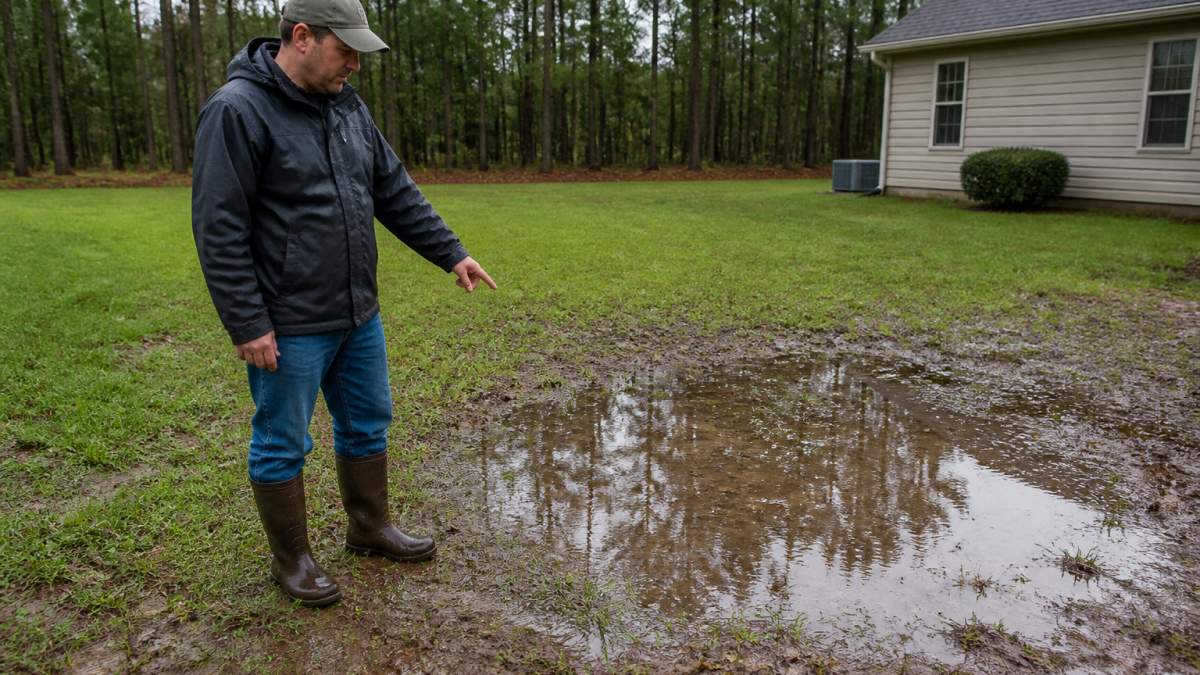
Identify low spots and assess your yard slope
Low spots are the obvious culprits. Walk your property after a heavy rain and mark where water gathers. These are your drainage problem zones.
Yard slope matters more than most homeowners realize. If your lot is flat or slopes toward your house, you're fighting gravity.
Check your foundation area first. Water pooling near your house is serious. It can crack foundations, flood basements, and damage structural integrity.
Check soil type and infiltration capacity
Not all soil absorbs water equally. Sandy soil drains fast. Clay soil holds water like a bucket. Compacted soil resists drainage entirely.
Dig a hole about 12 inches deep in your problem area and fill it with water.
Clay and compacted soils are common culprits. Heavy foot traffic, construction equipment, or years of mowing compress soil, leaving water nowhere to go but sideways and up.
Locate where water is flowing from
Standing water doesn't appear by magic. Trace the source.
Look uphill from your pooling area. Is there a roof downspout dumping water? A neighbor's drainage system? A natural slope carrying runoff from higher ground? Heavy rain events reveal flow patterns clearly.
Check your gutters and downspouts. A single downspout can deliver hundreds of gallons during a storm, and if that water lands in one spot, pooling happens fast.
Yard Drainage Solutions That Actually Work
Not every standing water problem needs the same fix. Temporary solutions help during heavy rain; permanent ones address the root cause and keep water moving year-round.
Quick fixes for temporary pooling
Some problems resolve with simple interventions, best for minor pooling that happens only during heavy storms.
Fill low spots with topsoil. If the low area is small, raising the grade slightly redirects water.
Install temporary surface drainage. During wet seasons, dig a shallow channel that slopes downhill to guide water toward a better outlet.
These quick fixes buy you time while you plan a permanent solution.
Permanent solutions for chronic standing water
A French drain works for most residential properties. It's the industry standard for a reason.
Regrading your yard addresses the root cause if your slope is wrong.
Dry wells work when you have no surface outlet. Water flows into an underground chamber where it infiltrates into surrounding soil.
Swales and ditches direct surface runoff visibly across your property. They're less expensive than buried drainage but more noticeable.
Install a French Drain for Yard Drainage
A French drain is the most reliable yard drainage solution for most properties. It handles volume, works in tight spaces, and lasts decades with minimal maintenance.
How French drains work and when to use them
A French drain is simple in concept. Water enters a perforated pipe buried in a gravel trench that slopes gently downhill, and gravity carries it toward a safe outlet.
The perforated pipe lets water in from all sides. Gravel surrounds it, allowing water to flow freely while filtering sediment, and landscape fabric keeps soil from clogging the gravel.
French drains work best when:
- Your yard has a slope you can work with
- You have a safe place to discharge water (storm drain, creek, or daylight outlet)
- Standing water covers a larger area
- You need a permanent, low-maintenance solution
They struggle in flat yards with no outlet or in clay soil with zero infiltration capacity.
Step-by-step installation process
Step 2: Locate utilities. Call your local utility locating service before digging. Gas, electric, water, and sewer lines are buried.
Step 4: Lay landscape fabric. Line the bottom and sides of your trench with landscape fabric.
Step 6: Create an outlet. At the downhill end, the pipe must exit somewhere. Daylight outlets let water surface naturally.
Step 7: Restore the surface. Cover the gravel with topsoil and seed with grass or plant landscaping.
Regrading Your Yard for Drainage
Regrading is the most permanent fix for standing water caused by poor slope, and the most expensive and disruptive. But when slope is the problem, nothing else truly solves it.
How regrading fixes standing water
Regrading means moving soil to change your yard's elevation and slope. If water pools because your yard slopes toward your house, regrading reverses that slope.
Proper grading slopes water away from structures and toward natural drainage areas.
Regrading solves the problem at the source. You're not adding drainage infrastructure; you're fixing the landscape itself.
When to regrade versus use other solutions
Regrade if:
- Your yard slopes toward your house or toward a low spot
- Your soil has decent infiltration capacity
- You have space to move soil
- You want a permanent, low-maintenance solution
Don't regrade if:
- Your soil is clay with poor infiltration (water will still pool)
- Your lot is too flat to create meaningful slope
- You can't afford the excavation costs
- A French drain or other method will solve your problem more cheaply
Sometimes regrading is the clear answer. Often, a French drain or swale costs less and works just as well.
Other Drainage Methods: Swales, Dry Wells, and Ditches
French drains and regrading aren't your only options. Depending on your situation, other methods may work better.
Swales and drainage ditches
A swale is a shallow, planted ditch that directs surface runoff. It's visible but can look intentional if landscaped well. Swales work best on gentle slopes where water flows naturally downhill.
A swale differs from a traditional ditch. Its gentle sloped sides, usually 3:1 or 4:1, prevent erosion and allow mowing, while a ditch is steeper and less finished-looking.
Swales work well when:
- You have a visible slope to work with
- Water volume isn't extreme
- You don't mind a landscaped drainage feature showing
- You want low cost and easy maintenance
Plant a swale with native grasses or ornamental plants. It drains water while improving your landscape's appearance.
Dry wells and underground drainage
A dry well is an underground chamber that catches water through a pipe or surface inlet and lets it gradually seep into surrounding soil.
Dry wells work only in soil with decent infiltration. In clay soil, they fill up and overflow. In sandy soil, they work great.
A dry well is useful when:
- You have no surface outlet for water
- Your soil drains reasonably well
- You want an invisible solution
- Water volume is moderate
Install a dry well at the end of a French drain or as a standalone system. They're less expensive than regrading but require good soil conditions.
Cost to Fix Yard Drainage and What Affects Price
Drainage project costs vary wildly. A small French drain might cost a few hundred dollars. Major regrading or complex systems can run several thousand. Several factors drive the price.
Factors that determine drainage project costs
Project scope. Small problem areas cost less than yard-wide drainage issues.
Soil conditions. Clay soil requires more work. Compacted soil needs ripping before drainage installation.
Excavation difficulty. Existing trees, structures, or hardscaping complicate digging.
Outlet availability. Proximity to a storm drain or natural outlet reduces costs.
Permit requirements. Some jurisdictions require permits for drainage work.
Professional versus DIY. DIY installation saves labor costs but requires equipment rental and knowledge.
Getting an accurate estimate
Never guess at drainage costs. Get professional estimates. A qualified drainage contractor can assess your site, identify the right solution, and quote accurately.
When requesting estimates, provide:
- Photos of pooling areas
- Your property size
- Soil type (if you know it)
- Desired outlet location
- Any constraints (trees, structures, utilities)
Compare estimates carefully. The cheapest option isn't always the best. The contractor who takes time to diagnose your problem properly usually delivers the best result.
Permits, Safety, and When to Call a Professional
Drainage work involves digging, moving soil, and potentially affecting neighbors. Several legal and safety considerations apply.
Local regulations and easement rules
Most jurisdictions require permits for drainage systems. Permits ensure work meets code and doesn't harm neighboring properties. Check with your local building department before starting.
Easements matter too. If water naturally drains across a neighbor's property, you may need easement rights. Discharging water onto a neighbor's land without permission creates liability.
Some municipalities require drainage plans for projects above a certain scope. A professional contractor knows local rules and handles permit applications.
Utility locating and excavation safety
Before digging anywhere, call your local utility locating service. In most areas, call 811 or your state's equivalent. Utilities mark their lines free of charge.
Gas lines, electrical lines, water mains, and sewer pipes are buried everywhere. Hitting one is dangerous and expensive. It's not optional; it's the law.
Excavation also requires safe practices. Deep trenches can collapse. Proper shoring and safety protocols protect workers.
When DIY fixes are enough and when to hire help
DIY works for simple situations:
- Small French drains in accessible areas
- Minor grading adjustments
- Simple swale installation
- Downspout extensions
Hire a professional when:
- Standing water is chronic and covers large areas
- Soil is clay or heavily compacted
- You need permits
- Utilities are in the way
- You lack excavation equipment
- You want a warranty
We assess your situation, recommend the right solution, and execute safely and efficiently. Our work complies with local standards and comes with professional backing.
Standing water in your yard doesn't fix itself. Ignoring it leads to foundation damage, flooded basements, and a permanently waterlogged lawn.
Start by diagnosing why water pools on your property. Assess slope, soil type, and water source. Then choose the right fix: French drain, regrading, swale, or dry well.
If your drainage problem is serious or your property is complex, professional help ensures the job is done right. Four Oaks Grading and Septic LLC specializes in drainage solutions tailored to your property's needs. We handle site assessment, permitting, excavation, and installation with the expertise to get water moving away from your home safely and permanently. Get an Estimate today and stop living with standing water.
Frequently Asked Questions
What causes standing water in a yard after rain?
Standing water forms when yard slope is poor, soil is too compacted to absorb water, or drainage routes are blocked. Heavy rain overwhelms the soil's infiltration capacity, especially in clay-heavy areas. Low spots naturally collect water. Downspouts, hardscaping, and grading that directs runoff toward your house rather than away from it all contribute. Identifying which factor applies to your yard is the first step to choosing the right fix.
Will regrading a yard fix standing water permanently?
Regrading works well if poor yard slope is the root cause. By adjusting the grade to redirect surface runoff away from low spots and your foundation, you eliminate the pooling source. However, if the soil itself has poor infiltration or the water table is naturally high, regrading alone may not fully solve the problem. A professional can assess whether regrading will work for your situation or if you need a French drain or dry well in addition.
How much does it cost to fix yard drainage?
Drainage project costs depend on the solution type, yard size, soil conditions, and how deep you need to dig. Simple surface fixes like improving grading or installing a swale cost less than French drains or dry wells, which require excavation and materials. Get an estimate from a professional who can evaluate your specific site. Pricing varies based on your exact situation, so check the Four Oaks Grading and Septic website for current prices or a quote tailored to your property.
Can I dig a hole and fill it with gravel to fix standing water?
A gravel-filled hole works as a basic dry well for small amounts of pooling water, but it's a temporary fix. Gravel alone has limited drainage capacity and will eventually clog with sediment. For lasting results, a properly installed dry well includes perforated pipe, landscape fabric, and the right depth to handle your yard's stormwater volume. If standing water is severe or recurring, a French drain or regrading is more reliable than gravel-only solutions.